 serin labs
The controller has a local browser interface after it joins your Wi-Fi network. Complete the Apple Home, ESPHome, or Matter setup guide first. The interface you see depends on the installed firmware.
Open the controller
- Connect your phone or computer to the controller's local network.
- Find its address. HomeKit-compatible and Matter-compatible firmware use
http://Serin-XXXX.local, with the controller's own four-character suffix. ESPHome useshttp://<device-name>.local; after adoption, use the name you chose. - Open that address in a browser. If the name does not resolve, find the controller in your router's connected-device list and open
http://<controller-ip>. The ESPHome dashboard also shows the IP address.
Check: You should see the controller's current state and available controls. Use http://, not https://. On HomeKit-compatible firmware, you can also add this page to your phone's home screen for quick access.
Change a setting and check the result
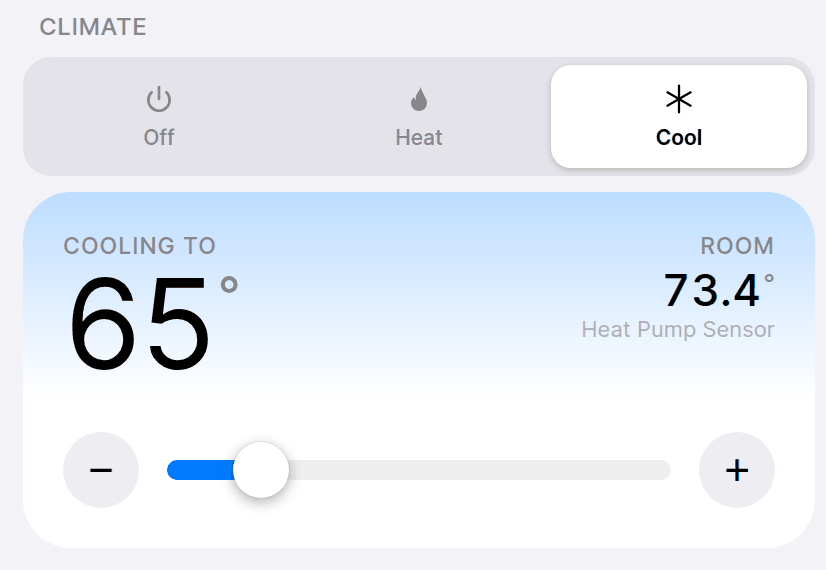
- Choose a supported mode and target temperature. Fan and vane controls are available when supported by the indoor unit and firmware configuration.
- Check that the indoor unit responds and the reported state reflects your change. A page that opens confirms network access; the unit's response confirms the CN105 connection.
- Try a change with the handheld remote and check that the controller reports it back. If commands do not reach the unit, use CN105 troubleshooting.
The HomeKit-compatible and Matter-compatible interfaces expose heat-pump controls beyond the smart-home app's thermostat card. Apple Home has no vane controls; Google Home, Alexa, and SmartThings may also omit fan speed, Dry, and Fan-only modes. See the controls reference for the differences.
ESPHome has its own web server, with the entities defined in its configuration. It provides direct control while Home Assistant is unavailable. Keep ESPHome web server enabled when customizing the configuration if you want to retain browser access.
Find settings, diagnostics, and logs
On HomeKit-compatible firmware, the interface includes the Apple Home pairing card, device name, °C/°F preference, unit capabilities, Wi-Fi scanning, and live logs. Its Room Sensor card selects temperature sources. Matter-compatible firmware also provides thermostat and vane controls, diagnostics, settings, and live logs; its pairing flow uses the Matter setup code.
- Select a room temperature sensor.
- Interpret the available diagnostic readings.
- Update firmware, change Wi-Fi, or reset pairing.
For ESPHome logs, use the controller's browser interface or the ESPHome dashboard. HomeKit screenshots on the platform overview show a different interface from ESPHome's web server.