 serin labs
Trane and American Standard Ductless: Same Unit, Different Badge
Your installer put in ductless heads. The badge on the front says Trane, or it says American Standard. So you search "Trane ductless smart thermostat," and the internet has almost nothing for you. Meanwhile there's a whole ecosystem of local-control projects out there, and every one of them is written up under a different word: Mitsubishi.
Here's the thing nobody tells you at the point of sale. The badge is a brand, not a factory. Search the right name and the answer was there the entire time.
Quick Facts
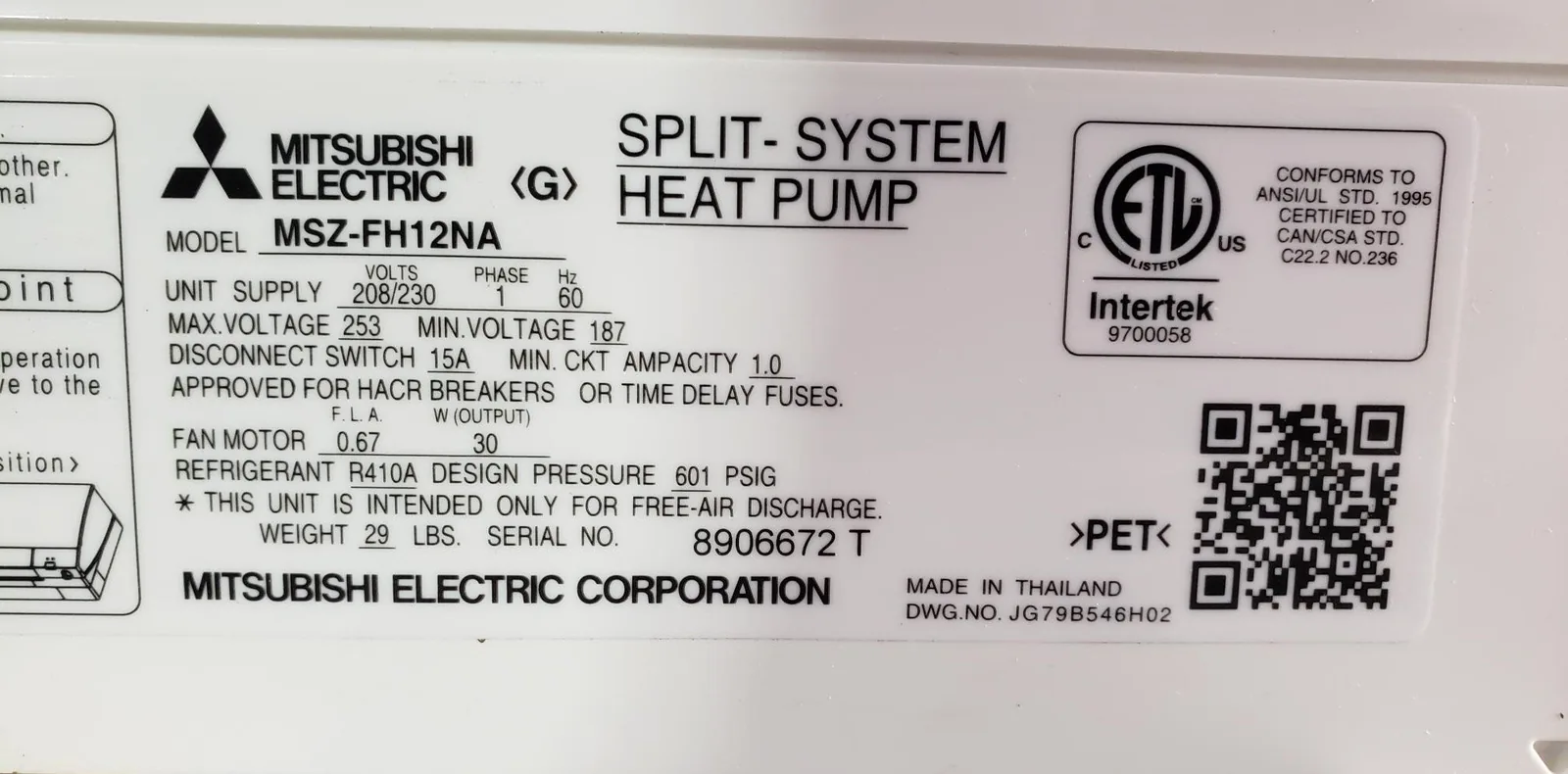
- The relationship: Mitsubishi Electric and Trane Technologies plc run a 50/50 joint venture, Mitsubishi Electric Trane HVAC US LLC (METUS), formed in 2018. It sells under Mitsubishi Electric, Trane/Mitsubishi Electric, and American Standard/Mitsubishi Electric brands.
- The prefixes our checker recognizes: NAXWST, NTXWPH, NTXMPH, NTXWST, NTYWST.
- The port: the same CN105 5-pin serial connector Mitsubishi-badged units use.
- The proof: the Trane indoor-unit service manual for the NTXWST/NTYWST series (No. OBHT732) carries a Mitsubishi Electric Corporation copyright.
- The shortcut: if your unit runs on the Kumo Cloud app today, it has the port.
- Cost of local control: from $35 for a pre-assembled board, or the cable alone at $8.
- One board per indoor head. The outdoor unit doesn't get one.
The Badge Is a Brand, Not a Factory
Mitsubishi Electric's US arm says it plainly on its own about page: "We expanded our strength as a company by entering a 50/50 joint venture with Trane Technologies plc in 2018 to become Mitsubishi Electric Trane HVAC US (METUS)." The same page shows three brand families side by side: Mitsubishi Electric HVAC, Trane/Mitsubishi Electric, and American Standard Heating & Air Conditioning/Mitsubishi Electric.
That's the whole explanation. Three badges, one joint venture, and for the ductless lines in question, one set of hardware underneath.
You can watch it in the documentation, too. The indoor-unit service manual for the NTXWST and NTYWST series, No. OBHT732, is published by Mitsubishi Electric Trane HVAC US LLC out of Suwanee, Georgia. Its copyright line reads "© Copyright 2018 MITSUBISHI ELECTRIC CORPORATION." A Trane-badged wall unit ships with a Mitsubishi Electric service manual, because that's what it is.
The Model Numbers, Cross-Referenced
This is the part that saves you an afternoon. The compatibility data behind our model checker carries one Trane/American Standard record, and these are the exact model strings in it:
| Model family | Badge | Example in our list | Verdict |
|---|---|---|---|
| NAXWST | American Standard | NAXWST09A112AB | ✓ Compatible |
| NTXWPH | Trane | NTXWPH09B112AA | ✓ Compatible |
| NTXWST | Trane | NTXWST12A112AA | ✓ Compatible |
| NTYWST | Trane | NTYWST12A112AA | ✓ Compatible |
| NTXMPH | Trane | — | ✓ Compatible |
The pattern in the prefix is worth learning. NA is the American Standard side, NT the Trane side. The Y in NTYWST marks a cooling-only unit, the same way Mitsubishi's own MSY does against MSZ. And the tail, the A112AA or B112AA part, is a trim code rather than a compatibility switch. Unlike several Mitsubishi families, no Trane row in our data is suffix-dependent.
American Standard's own NAXWST product page lists capacities from 09 through 36 kBtu/h. Our record only names one of them as an example, so treat the table above as a prefix guide and run your full model number through the checker before you buy anything.
One caution on NTXMPH. The OBHT732 indoor manual points to a separate outdoor unit service manual, No. OCHT573, for the NTXMMX and NTXMPH series. The controller connects to the indoor unit, so whatever the outdoor unit is called, the model number that decides this is the one on the indoor head.
The Tell: If It Runs on Kumo Cloud, It Has the Port
There's a faster check than any model number, and it needs no tools. Do you control this system today with the Kumo Cloud app?
American Standard's NAXWST page says the unit is "Compatible with kumo cloud® control app and Thermostat Interface." Nowhere on that page does the phrase "Mitsubishi Electric" appear. But Kumo Cloud is Mitsubishi's app, and as I covered in the CN105 port guide, Kumo Cloud compatibility lines up cleanly with the presence of the connector. The app is a fingerprint.
So: Kumo Cloud today means CN105 tomorrow. That's the sixty-second version of this entire post.
It's the Same CN105 Port, in the Same Place
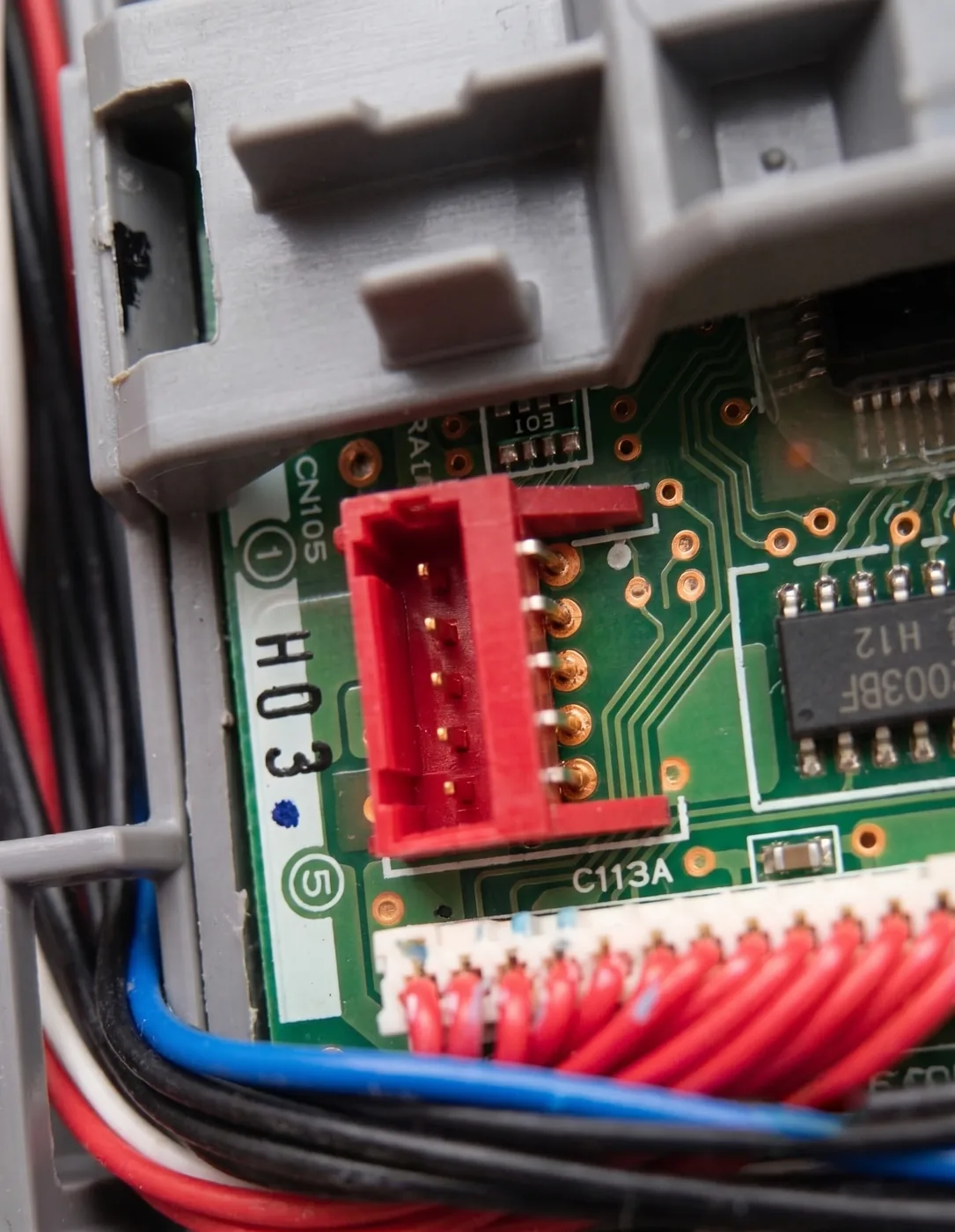
CN105 is a small 5-pin serial connector on the indoor unit's control board, usually red and sometimes white, with "CN105" printed on the board beside it. It's the port the factory Wi-Fi interface uses, the port the wall thermostats use, and the port every open-source project in this space connects to. Our wiring reference shows the pinout.
Nothing about that changes when the front panel says Trane. Same board, same connector, same serial protocol. Multi-zone systems work the same way as well: every indoor head has its own port and needs its own board, and the outdoor unit doesn't get one at all.
What Local Control Actually Gets You
The connection is two-way, which is the part that matters. A board on CN105 doesn't just send commands, it reads the unit's real state back: mode, setpoint, room temperature, and on many units compressor frequency and outside air temperature. Infrared controllers can't do that, because a remote only ever talks.
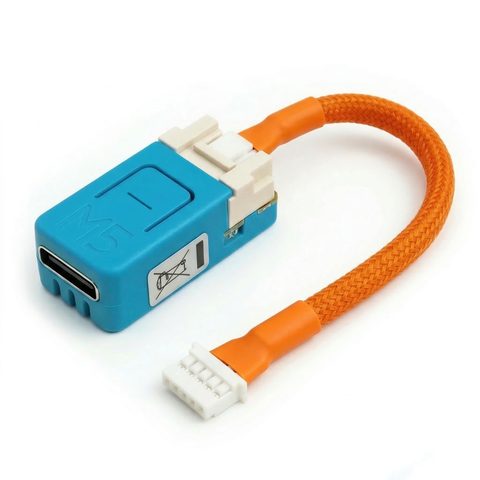
The Serin controller is an ESP32 board that clips onto that port, from $35 pre-assembled, or build your own from the parts list with a ready-made cable from $8. You flash it from your browser over USB after it arrives; it doesn't ship with firmware on it. Two free, open-source builds are offered: ESPHome for Home Assistant, or a HomeKit-compatible build for Apple Home and Siri. Both are community open-source projects rather than our own code, and the licenses page names every upstream project and license behind them.
Both run entirely on your network. No account, no vendor cloud, and your handheld remote keeps working alongside it.
Where the Cross-Reference Runs Out
Now the honest part, because "Trane ductless" covers more than the five prefixes above.
Trane sells ductless systems under other model families entirely. Their 4MXW38 single-zone line, for instance, lists indoor units as 4MXW3812A, 4MXW3818A, and 4MXW3824A. Those model numbers are not in our data, and I'm not going to tell you what's inside them. If your label doesn't start with NAX or NTX, the cross-reference in this post simply doesn't apply to you.
Our record also skews wall-mounted. Every example in it is a wall unit, so a floor-mount or cassette head wearing a Trane badge may well be the same story, but it isn't one we've written down yet.
When the checker doesn't recognize a model, it says so rather than guessing, and points you at two things: open the cover and look for a connector labeled CN105, or send us the model number and we'll look it up. Take the second option if the first one makes you nervous. That's what the form is for.
What This Doesn't Change
Being rebranded Mitsubishi hardware doesn't rewrite your paperwork. Your unit was sold, installed, and warranted by Trane or American Standard, and that's who you call when the compressor fails. Connecting any third-party accessory may affect your equipment warranty, so check with your installer if that's a live concern for you. Working inside an HVAC unit carries risk; kill power at the breaker first.
There are also cases where the branded accessories are the right purchase. If you want the manufacturer's own app with the manufacturer's support behind it, buy the Kumo Cloud interface through your dealer. If you want a physical thermostat on the wall with no phone and no network involved, buy the Thermostat Interface and a wall controller. I made that same argument in the full comparison of every control option, and being cheaper doesn't make our board the right answer for those two households.
Serin Labs is an independent project. It isn't affiliated with, endorsed by, or certified by Mitsubishi Electric Corporation, Trane Technologies plc, or the American Standard Heating & Air Conditioning brand. Mitsubishi Electric is a trademark of Mitsubishi Electric Corporation; Trane and American Standard are trademarks of their respective owners. Model numbers appear here only to describe compatibility.
Who Should Buy What
- Your label starts with NAXWST, NTXWPH, NTXWST, or NTYWST. You're compatible, and everything written about Mitsubishi CN105 control applies to you word for word. Start reading under that name.
- You already run Kumo Cloud and just want out of it. The port is confirmed by the app itself. The Kumo Cloud alternative writeup covers what you gain and what you give up.
- You want manufacturer support, or a screen on the wall and nothing else. Buy the branded interface from your dealer. That's a real answer, not a consolation prize.
- Your model number isn't in the table and doesn't start with NAX or NTX. Don't assume. Check the board or ask us, in that order.
The Short Version
Owners of these systems lose hours to a search problem, not a hardware problem. The community documented this port thoroughly, and then filed all of it under a brand name that isn't printed anywhere on your unit.
- Read the model number off the indoor head, not the outdoor unit or the remote.
- Type it into the model checker for an instant answer.
- Get the board and cable, one set per indoor head, and flash a firmware from your browser. The ESPHome vs Apple Home comparison helps you pick.
The badge on the front is marketing. The port behind the cover is engineering, and it's the same port.
Related
- Check your model — instant compatibility answer
- Does your unit have a CN105 port?
- Get the hardware
- Every way to make a mini-split smart, compared
Next step
Check your unit first
Type your indoor unit's model number for a verdict in under a minute. If it fits, the firmware flashes in the browser in about two minutes.